
Perfectionism Is Not a Personality Trait


Why so many high achieving women are leaving it at the baggage claim and how to practice something different
At our January Modern Revival Women’s Experience, we asked a simple question: What are you leaving at the baggage claim this year?
The responses came quickly and with surprising consistency.
Perfectionism.
Hearing it repeated again and again felt clarifying. Not because it was new information, but because it finally had language. Perfectionism was not showing up as an individual flaw. It was showing up as a shared pattern.
And that matters.
Because perfectionism is rarely about excellence. It is not simply about having high standards or wanting to do good work. More often, it is about safety. It is about avoiding judgment, minimizing risk, and trying to stay in control in environments that do not always feel forgiving.
What Perfectionism Actually Is
Perfectionism often disguises itself as responsibility and discipline. It can look like ambition, commitment, and competence. In many professional and social settings, it is even rewarded.
But underneath, perfectionism is driven by fear. Fear of being wrong. Fear of being seen as unprepared or not enough. Fear that mistakes will cost more than they should.
Instead of inviting growth, perfectionism narrows our options. It delays action, limits experimentation, and keeps us stuck in cycles of overthinking and self monitoring. Over time, it becomes exhausting to carry.
Why This Shows Up So Strongly in Women
This pattern does not emerge in a vacuum.
From an early age, many women receive the message that being good means being composed, capable, and correct. Success is often praised when it is paired with likability and emotional control. Mistakes feel more visible and, in some cases, less forgivable.
Research in psychology and gender socialization reflects this reality. Women are more likely to internalize failure and interpret mistakes as personal shortcomings rather than normal parts of learning. Among high achieving women, perfectionism is strongly linked to anxiety, burnout, procrastination, and chronic self doubt, even when external success is evident.
Perfectionism becomes a strategy for staying acceptable. Over time, it also becomes a barrier to feeling fully alive.
Why This Matters for Connection and Wellbeing
Perfectionism does not only affect productivity. It affects relationships.
When perfectionism is in charge, it becomes harder to ask for help and harder to be seen mid process. Joy gets postponed until some imaginary standard is met. Rest begins to feel earned rather than necessary.
Many women learn how to function at a high level while feeling disconnected from themselves and from others. Life may look full, but it can feel breakable underneath.
This is not a personal failure. It is a relational one.
What We Witnessed in the Room
When women named perfectionism out loud at the January experience, there was recognition, relief, and a sense of shared understanding. Naming it together reduced its power.
Perfectionism thrives in isolation. It loosens in community.
When people realize they are not alone in the pattern, the nervous system settles. Choice returns. Possibility opens.
How to Practice Releasing Perfectionism
These are small actions you can take immediately.
- Say “I don’t know yet.” Don’t add an explanation.
- Share a work in progress. Label it “draft” and ask for feedback.
- Set a 20-minute timer and send whatever you have when it ends. Don’t extend the time.
- Answer in one or two sentences. Stop before you justify.
- Leave one small imperfection alone. No follow-up.
One change is all it takes to break the pattern.
The Invitation
At Modern Revival, we are not interested in helping women become more impressive. We are interested in helping them feel more connected to themselves and to one another.
Perfectionism is not something to fix or shame. It is something to notice, name, and gently set down.
If perfectionism was one of the things left at the baggage claim this year, it was not a loss. It was an act of discernment. A choice to make room for presence, connection, and a more sustainable way of moving through life.
That is the kind of work we believe in.
In the News
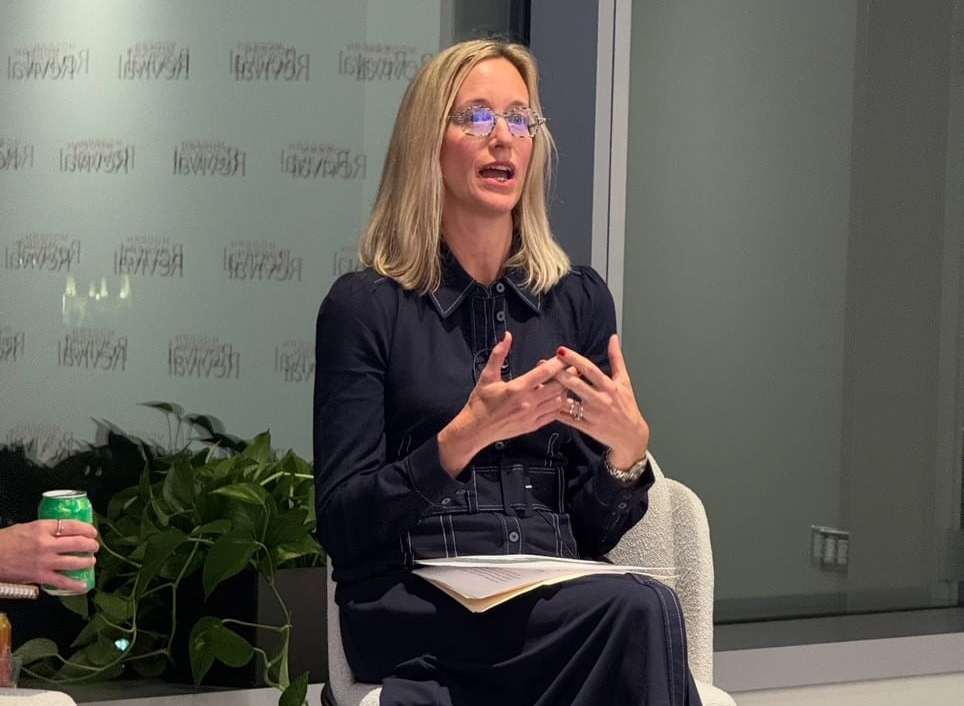
Heather Hostetter As Featured Speaker at Modern Revival Women's Experience October

Mikel Blair Of Modern Revival On How Authenticity and Vulnerability Pay Off and Help You Win Personally and Professionally

